“If you know your archetypes- and not just yours, if you know how to perceive the world in archetypes, through archetypes- everything changes. Everything. Because you have two things: you can see through one eye which is impersonal, and through the other, which is personal. That’s the way the game is written down here.”
–Caroline Myss


When applying the Archetypal Literary Theory to Joseph Boyden’s Three Day Road, we observe many archetypes in the characters and the situations they face.
After reading up to Chapter 21 in the novel, titled Turning, I have observed archetypes in the three main characters. Having read two thirds of the novel, I would assume that all of the characters with archetypes have been introduced.
The first character archetype that I observed was the Mother Figure in Niska. Immediately in the first chapter, it is evident that she is a caring and wise mother figure. When she says “Elijah Whiskeyjack is as close to a relation as I still have, and I will paddle him home” (Boyden 4), it is clear that she cares deeply for Elijah and regardless of the fact that they are not family, she will tare care of him. I see her as the Mother Figure not only because she is the female elder, but because you can clearly see her love and concern for Xavier. She was left all alone when Xavier and Elijah went off to war, but she continues to feel nothing but love for them.
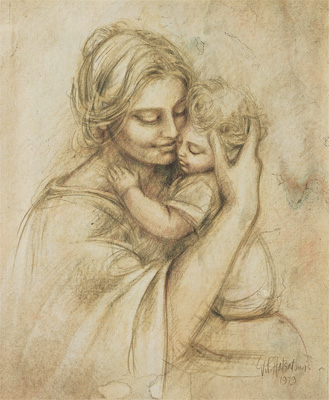
In Chapter Eight, titled Captive, she expresses that she knows Xavier wants to talk but is refraining from doing so. Instead of forcing it out of him she takes a very gentle and caring approach, “He cannot speak to me yet, and so I decide, here on the river, that I will speak to him” (Boyden 89). She explains in Chapter 12 that at the age of 17, grown men would seek her advice and ask her questions. It may not seem like much, however when you consider the early 1900s, such as when this novel takes place, men did not listen to women and their mothers were the only females they somewhat respected. Niska is the clear Mother Figure in this novel- caring, loving, and wise.

Niska reminds me of Mrs. Incredible, Elastigirl, from The Incredibles movies. Mrs. Incredible holds her family together, both literally and figuratively. She cares for her children, she is supportive yet stern but when she needs to she jumps into action, saving her husband.
The other archetypes I observed were Xavier and Elijah. They both act as Heroes, in their own ways, but also employ other archetypes.

Elijah is the bolder out of the two, he is more confident. When the boys are in the residential school, Xavier leans on Elijah to help him as they experience the westernized world for the first time. In Chapter 21, Xavier is called by the Sergeant and he is very nervous and afraid, “My stomach fills with sour juice. The men look at me then avert their eyes ” (Boyden 254). He had gone to see a woman he met, which he is undoubtedly not allowed to do, and he realizes the Sergeant must have found out. Elijah can see his clear fear, and helps him, “No worries, I will come with you” (Boyden 254). Elijah is a hero because he helps Xavier survive in many ways. He teaches Xavier English, he speaks for Xavier, he protects Xavier, and he helps them fight their way through the war as Cree men surrounded by Canadians. Elijah begins as a hero, but ultimately turns into the doppelganger, the evil mirror to Xavier’s good.

Xavier is what many will call the ‘real’ hero. He can speak and understand English, and is a skilled sniper himself, however he lets Elijah do things on his behalf as he sees it helps Elijah. Instead of proving that he is just as good, or even better, than Elijah, he lays low to give Elijah the satisfaction and praise he desires, “It was my kill. I know best where to find it. I know that this must sting Elijah a little. According to the others, he is the resident expert, although I am a fine shot too. As fine as Elijah” (Boyden 138). Elijah’s doppelganger archetype comes out when he begins scalping his kills, and it begins to become clear that he is losing his focus. He is clearly addicted to morphine and is losing control over himself. At this point, all he wants is the acceptance of the other platoon members.

Despite Elijah’s worsening irrationality, Xavier continues to hide behind the shadows to give him the spotlight. Xavier is a hero for his willingness to sacrifice all in to let Elijah be happy, yet he is also the scapegoat as he essentially takes the blame for all the bad that happens. By holding back to give Elijah the praise that he desires from the other platoon members, he is somewhat letting all the bad rest on him. Xavier’s journey is different compared to that of other heroes as he is not evidently the hero from the beginning of the story. It starts out seeming as though Elijah is the hero, and I believe that Xavier’s hero persona will only grow as the novel comes to an end.

After analyzing the archetypes, my predictions of the novel have changed. Before analyzing the novel in such detail, I was assuming that Elijah would snap out of his seemingly uncontrollably destructive episode. I’m now hoping that Xavier realizes no matter how happy the praise and acknowledgment from the other platoon members makes Elijah, he must come through to prevent a catastrophe. Elijah’s morphine addiction and truthfully what seems to be a killing addiction, could make things end very terribly.

Source: Boyden, Joseph. Three Day Road. Toronto: Penguin Canada, 2005. Print.
 Elle's Tells