University admissions program-specific prerequisites. Why do they exist? This is a question I think most of us have asked ourselves before. They’re a pain, let’s set that straight! We all know they exist, and despite our strong feelings towards them, I think we know why they exist. Program-specific prerequisites are set to ensure each student has the same baseline of knowledge despite the school they went to, or the city they lived in.
But should grade 12 University level English be a requirement for entry into all university programs?
In Ontario, high school students are required to take English all four years. But should all university programs require University level grade 12 English for entry? *French programs may require grade 12 University level English or the French equivalent.*
Every university in Ontario requires the ENG4U course, or equivalent, for admission to any program. A Bachelor of Science in Nursing or a Bachelor of Arts in Criminology, both very different programs and both requiring grade 12 University level English as a prerequisite.
Should they both require a grade 12 University level English as a prerequisite? In my opinion, yes; they should both require an English course, as should all university programs. When thinking about a university program, resulting in a degree, there is a certain ‘level of intelligence’ that is perceived. People with university degrees are fairly intelligent, how else would they have made it through a multi-year subject based program? I believe that English class generates skills and knowledge that is related to ‘this level of intelligence’. I think of English class as discussions, reflections, writing, reading and simply the ability to communicate. Whether it be a Science program or an Arts program, they all need the ability to communicate.
Anyone who has ever taken an English class will know that it isn’t just writing essays and reading books. You learn vital life skills, skills needed in order to succeed. You learn how to effectively format your thoughts;be it in an essay or verbally, you learn how to analyze a text, properly structure essays/document and so many more skills that you will apply later in life. English class teaches you how to make connections and how to write/speak formally and informally. All of these skills are crucial and help tremendously in any post-secondary program.
I’m sure many people think don’t enjoy English class and see it as a hassle, and I just may have to agree with them sometimes, however the skills obtained and the life lessons learned will be tremendously beneficial for anyone no matter the path they end up.
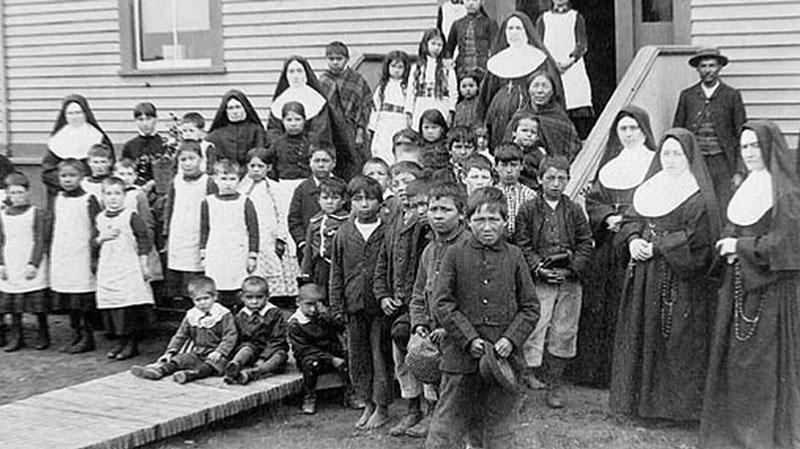
We focus on bringing back Indigenous languages, ceremonies, cultures, traditions – all that was lost over the past 150 years. This is how we’ll generate hope – for all Canadian people.
After reading the novel, I chose to conclude my analysis by reflecting on the postcolonial theory, and how it ties in with Three Day Road by Joseph Boyden.
I began my postcolonial theory based analysis with a thesis statement — Three Day Road by Joseph Boyden documents the colonial oppression of Indigenous peoples through the development of character Elijah Whiskeyjack and his experience of being pressured into becoming a different person, brought forth by the trauma of residential schools and the mistreatment of first nation’s people in the military during the First World War.
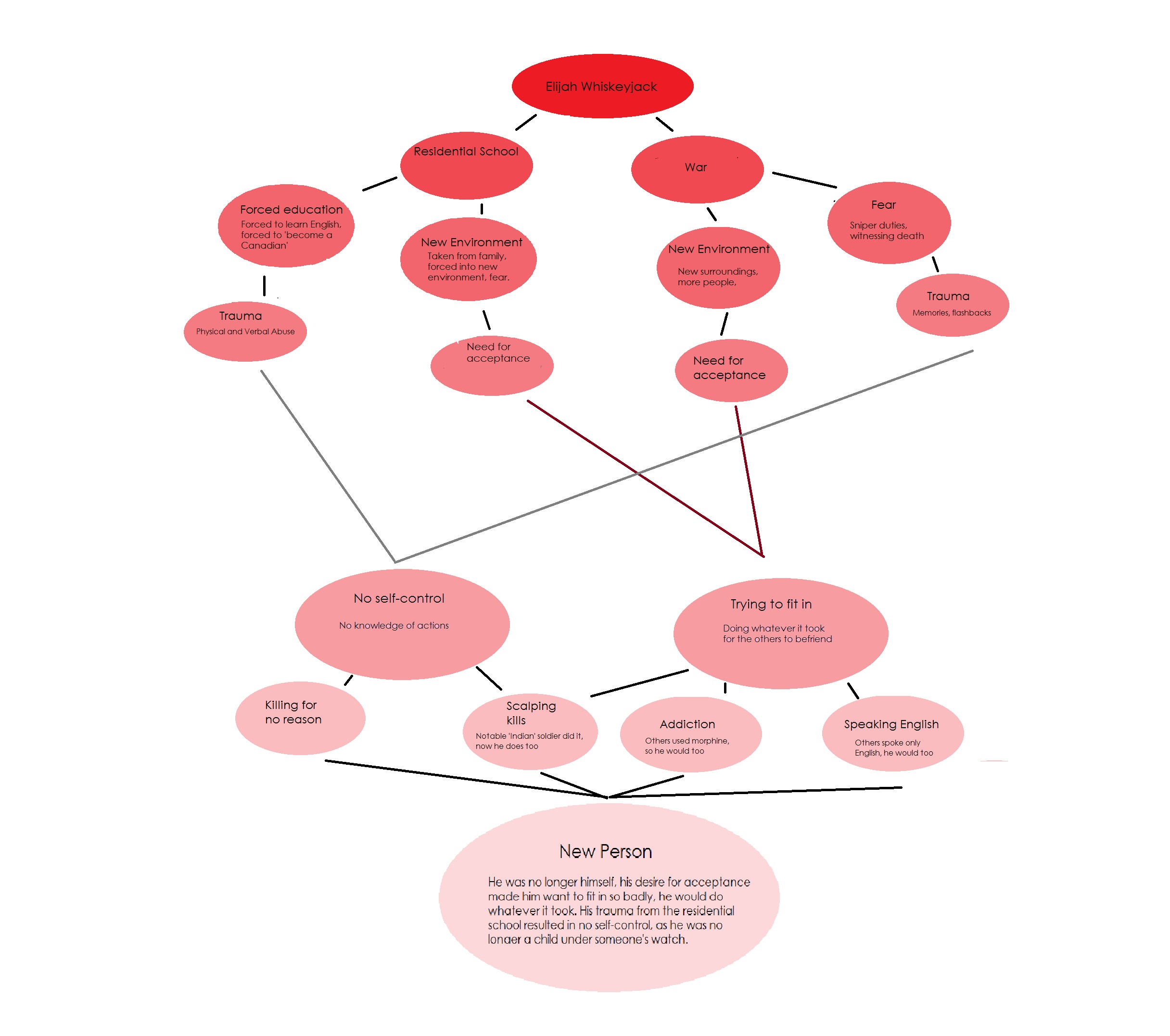
Incorporating other writing and media texts, I based my final analysis on the oppression of the Indigenous peoples. I have created a remix, a podcast, a concept/mind map, and a blog post.
Here is a video detailing a residential school survivor’s story. This is the type of video I extracted clips from for my remix.
The Indigenous peoples of Canada faced horrendous oppression. They were not treated like human beings. I have created a remix of many clips from videos and movies on residential schools to demonstrate the atrocities. Unfortunately I cannot post it due to copyright. Please refer to the video for reference.
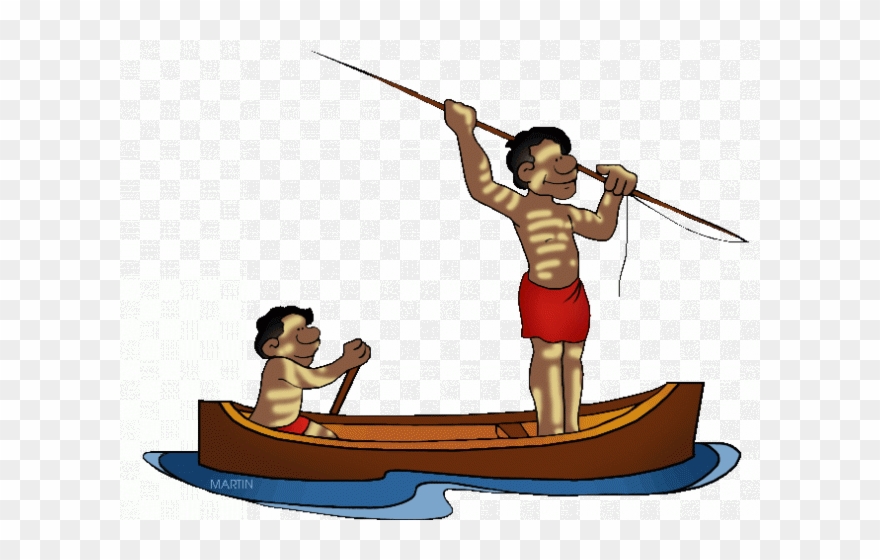
Xavier, Elijah, and Niska experienced great hardships in, and after the residential schools. The residential schools dehumanized the children, Xavier was forced to row a much older and larger lady across a river because she was a nun at his residential school. He was not seen as a human, but rather a slave. “He was a small boy, and her weight was great enough that the canoe did not lie level on the water, but he tried hard as he could to take her to the places she pointed at…. when he rested she would turn around and smack him hard on the head with her paddle”. (Boyden 217,218)
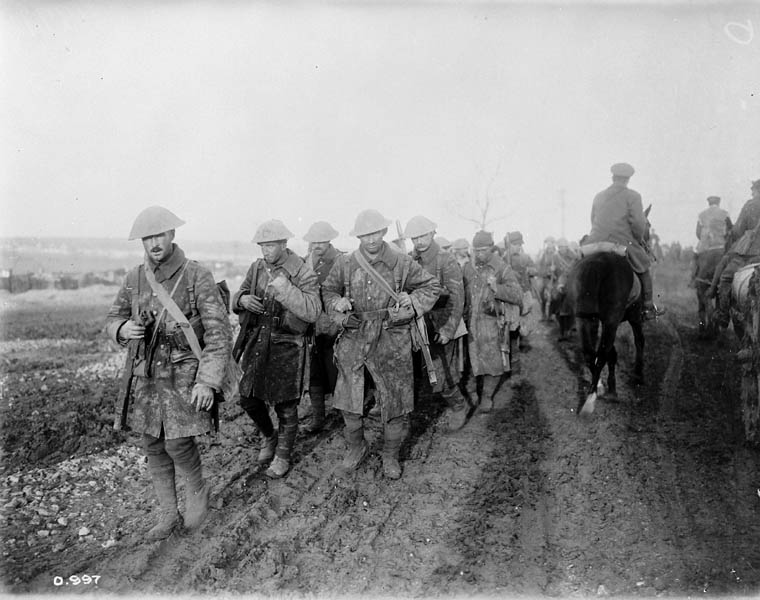
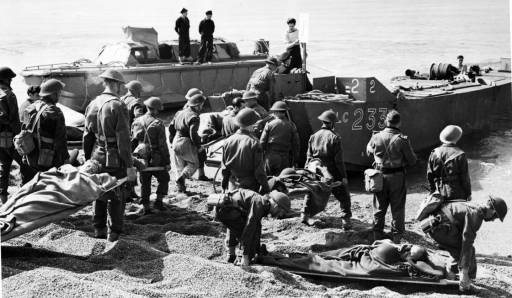
Sadly, the oppression did not stop once Elijah and Xavier went to war. They were ridiculed for their culture. One would only think that once they see Elijah and Xavier are only there to help the Canadians that they would stop, but that was not the case. They continued to be viewed as outsiders, untrustworthy, and worthless. This is a podcast I created, in which I discuss the oppression of Indigenous people during the First World War, in reference to Three Day Road.
As I began to further analyze the novel through postcolonial criticism, I noticed a pattern with Elijah. His character development came in such a way that it was certainly all driven by the trauma he experienced in the residential school.
Elijah experienced such a debilitating identity crisis. He longed so desperately for the acceptance of his peers. He did whatever it took to be noticed, to receive praise. It is almost as if he is trying to keep his cultural identity, but form a new identity to satisfy the world he is in. He has subconsciously determined that the world he lives in, was not made for him and he must adjust as he sees fit.
The most significant revelation I came upon while analyzing the novel through the postcolonial theory, was the distinct differences in the Indigenous and Canadian culture. The different cultures allowed for the children to develop their unique identities, in different ways. Understandably, the novel was set in the early 1900s when Canada was not as diverse as we are today, but there were still extreme differences I noted. In my blog post titled ‘The differences between Indigenous and Canadian Culture: Three Day Road by Joseph Boyden Reflection‘, I analyzed what I found to be the differences that made the book.
Here is a little prompt, ” Their identities are shaped based on these connections they develop with their parents and elders. Xavier was raised by his aunt Niska and she taught him everything she knew, which was taught to her by her elders. This led to Xavier using these skills and this knowledge during the war, which helped him considerably. He was a highly skilled sniper, had very good tactical skills, and used all of what was taught to him to save his life and the lives of others. He knew about the windigo, and once Elijah started exhibiting symptoms, he knew what he had to do. “
The novel Three Day Road documents the harsh oppression of Indigenous peoples in Canada. Elijah’s bizarre character development is a result of the traumatic experiences had in the residential schools. While the novel does not directly focus on residential schooling, it is clear that Boyden is trying to express how it changes the course of a person’s life. My hope is that this portfolio, alongside my other 2 posts regarding the novel, will shed light on the horrors of residential schooling, and the oppression of Indigenous peoples in Canada.
As I reflect upon the novel before ending this post, my mind keeps drifting to how the circumstances of the novel are similar to a current event in our society, the hundreds of thousands of migrants in immigration detention in the United States. As I wonder how life in a residential school really was, I truly cannot imagine that it is that much different to how the children in those detention centers are being treated. Certainly there are many, many differences but in reality, they are truly very similar.
Source: Boyden, Joseph. Three Day Road. Toronto: Penguin Canada, 2005. Print.
While reading Three Day Road by Joseph Boyden, I observed great differences between the Indigenous culture, and the Canadian culture. Evidently these two cultures are very different, as they have come from different parts of the world and different backgrounds. The Indigenous culture is that of the first inhabitants of Canada, while the Canadian culture is heavily influenced by European culture. The novel Three Day Road by Joseph Boyden describes many aspects of the Indigenous culture and they are all but similar to the Canadian culture. The most noticeable difference was that of the cultural psychology.
The first, and biggest, difference I noted was the windigo. In the Indigenous culture, the windigo is a supernatural power that controls a person and turns them into a cannibal. In the fourth chapter of the novel, Niska introduces the windigo. She tells Xavier the story of one of the families in her clan, when she was a child. They were experiencing a shortage of animals to hunt, and one of the families took a drastic turn. The husband Micah decided to leave the land, taking his family with him, but tragedy struck and Micah died. His wife cut up her dead husband and ate him, feeding him to their baby as well.
After the elders found out, another mother offered to breastfeed the baby, and when she went to remove the baby, it bit her-refusing to let go. Micah’s wife and baby were turning windigo. The wife claimed that a man-beast forced her to feed on her husband. Niska’s father was forced to kill the wife and baby, as he was a windigo killer. If this were to have happened in the Canadian culture, it would be seen as a psychiatric condition. The mother was driven by her malnourished mind to do what she thought would save her and her baby.
The next cultural difference I observed was that of family relations/connections. Certainly every culture has their respective social habits and ‘way of life’, but the differences between the Indigenous and Canadian culture are significant. The Indigenous culture is very family based, everything the children know has been taught to them by their parents, or closest elders.
Niska and Xavier were both freed from the horrors of residential schooling when their family members broke out. Niska was freed by her mother, and she went on to free Xavier. Upon their return to home, they both continued to learn the ‘ways of the bush’ from their elders. This is undoubtedly significantly different to that of the Canadian culture. It is customary for all children to school, be taught a set curriculum, and be taught by their families as well. Back in the early 1900s, when Three Day Road was set, most Indigenous children were either forced to be in residential schools, or lived on their reserves and learned the traditional way.
With the way that these Indigenous children are taught by their parents and elders, they develop strong connections to family. Their identities are shaped based on these connections they develop with their parents and elders. Xavier was raised by his aunt Niska and she taught him everything she knew, which was taught to her by her elders. This led to Xavier using these skills and this knowledge during the war, which helped him considerably. He was a highly skilled sniper, had very good tactical skills, and used all of what was taught to him to save his life and the lives of others. He knew about the windigo, and once Elijah started exhibiting symptoms, he knew what he had to do.
Certainly not to say that the Canadian culture did not offer children the same chance of developing their identities, but public schooling is not the same as being taught in a traditional way which has been used since the beginning of time. Canada’s schooling system has changed drastically. With the Canadian schooling system changes, each generation was taught in a different way, and that did not allow for the same growth of character and identity as the continuous ways of the Indigenous culture.
The unique identities of either culture are expressed greatly in the novel through the wartime flashbacks. It is clear that Xavier’s actions are based strongly off of the lessons he was taught by Niska. He notices many things that others don’t. He notices Elijah’s worrisome tendencies. He realizes that Elijah becomes a windigo, and he knows what he must do. He loves Elijah dearly, they are brothers, but he knows that he must kill him as it has gotten out of control. Had he not been taught all of these life lessons by Niska, had he been stuck in the residential school like Elijah, he would not have known how catastrophic the conditions were getting.
Xavier learned everything he knew, because his aunt taught him everything she learned, and she learned from her mom. The Indigenous culture is unique in that the identities that the children form, are very similar to that of their parents. For them, it’s only natural for a child to do what their parent did. Niska’s father was a windigo killer, therefore she became a windigo killer. The closest thing to a son that she had was Xavier, and he went on to become a windigo killer. They follow paths that are set for them, but they also build their own routes along the way.
Canada is now known as a very diverse country. Many people use the term ‘cultural mosaic’, Canada is filled will many different ethnicities, cultures, and languages. Part of Canada’s cultural mosaic, is the Indigenous culture. When reflecting on Three Day Road, I had to think about how the early 1900s was so different to our present time. Back then, when the novel takes place, the Canadian and Indigenous cultures were very different. Now, the Indigenous culture is part of the Canadian culture. The Canadian culture is no longer solely European. We embrace all ethnicities, cultures, and languages.
Source: Boyden, Joseph. Three Day Road. Toronto: Penguin Canada, 2005. Print.
“If you know your archetypes- and not just yours, if you know how to perceive the world in archetypes, through archetypes- everything changes. Everything. Because you have two things: you can see through one eye which is impersonal, and through the other, which is personal. That’s the way the game is written down here.”
After reading up to Chapter 21 in the novel, titled Turning, I have observed archetypes in the three main characters. Having read two thirds of the novel, I would assume that all of the characters with archetypes have been introduced.
The first character archetype that I observed was the Mother Figure in Niska. Immediately in the first chapter, it is evident that she is a caring and wise mother figure. When she says “Elijah Whiskeyjack is as close to a relation as I still have, and I will paddle him home” (Boyden 4), it is clear that she cares deeply for Elijah and regardless of the fact that they are not family, she will tare care of him. I see her as the Mother Figure not only because she is the female elder, but because you can clearly see her love and concern for Xavier. She was left all alone when Xavier and Elijah went off to war, but she continues to feel nothing but love for them.
In Chapter Eight, titled Captive, she expresses that she knows Xavier wants to talk but is refraining from doing so. Instead of forcing it out of him she takes a very gentle and caring approach, “He cannot speak to me yet, and so I decide, here on the river, that I will speak to him” (Boyden 89). She explains in Chapter 12 that at the age of 17, grown men would seek her advice and ask her questions. It may not seem like much, however when you consider the early 1900s, such as when this novel takes place, men did not listen to women and their mothers were the only females they somewhat respected. Niska is the clear Mother Figure in this novel- caring, loving, and wise.
Niska reminds me of Mrs. Incredible, Elastigirl, from The Incrediblesmovies. Mrs. Incredible holds her family together, both literally and figuratively. She cares for her children, she is supportive yet stern but when she needs to she jumps into action, saving her husband.
The other archetypes I observed were Xavier and Elijah. They both act as Heroes, in their own ways, but also employ other archetypes.
Elijah is the bolder out of the two, he is more confident. When the boys are in the residential school, Xavier leans on Elijah to help him as they experience the westernized world for the first time. In Chapter 21, Xavier is called by the Sergeant and he is very nervous and afraid, “My stomach fills with sour juice. The men look at me then avert their eyes ” (Boyden 254). He had gone to see a woman he met, which he is undoubtedly not allowed to do, and he realizes the Sergeant must have found out. Elijah can see his clear fear, and helps him, “No worries, I will come with you” (Boyden 254). Elijah is a hero because he helps Xavier survive in many ways. He teaches Xavier English, he speaks for Xavier, he protects Xavier, and he helps them fight their way through the war as Cree men surrounded by Canadians. Elijah begins as a hero, but ultimately turns into the doppelganger, the evil mirror to Xavier’s good.
Xavier is what many will call the ‘real’ hero. He can speak and understand English, and is a skilled sniper himself, however he lets Elijah do things on his behalf as he sees it helps Elijah. Instead of proving that he is just as good, or even better, than Elijah, he lays low to give Elijah the satisfaction and praise he desires, “It was my kill. I know best where to find it. I know that this must sting Elijah a little. According to the others, he is the resident expert, although I am a fine shot too. As fine as Elijah” (Boyden 138). Elijah’s doppelganger archetype comes out when he begins scalping his kills, and it begins to become clear that he is losing his focus. He is clearly addicted to morphine and is losing control over himself. At this point, all he wants is the acceptance of the other platoon members.
Despite Elijah’s worsening irrationality, Xavier continues to hide behind the shadows to give him the spotlight. Xavier is a hero for his willingness to sacrifice all in to let Elijah be happy, yet he is also the scapegoat as he essentially takes the blame for all the bad that happens. By holding back to give Elijah the praise that he desires from the other platoon members, he is somewhat letting all the bad rest on him. Xavier’s journey is different compared to that of other heroes as he is not evidently the hero from the beginning of the story. It starts out seeming as though Elijah is the hero, and I believe that Xavier’s hero persona will only grow as the novel comes to an end.
After analyzing the archetypes, my predictions of the novel have changed. Before analyzing the novel in such detail, I was assuming that Elijah would snap out of his seemingly uncontrollably destructive episode. I’m now hoping that Xavier realizes no matter how happy the praise and acknowledgment from the other platoon members makes Elijah, he must come through to prevent a catastrophe. Elijah’s morphine addiction and truthfully what seems to be a killing addiction, could make things end very terribly.
Source: Boyden, Joseph. Three Day Road. Toronto: Penguin Canada, 2005. Print.
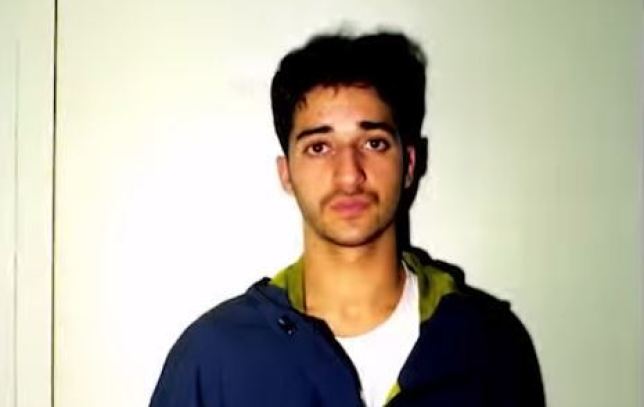
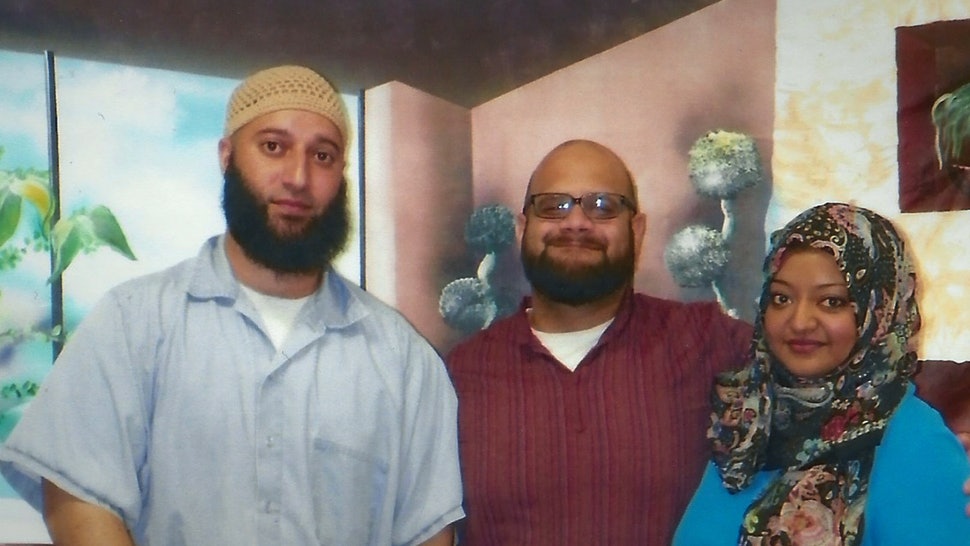
Adnan Syed is a Muslim-American man from Baltimore, Maryland who was born on May 21, 1980. One of the three children of “conservative parents” Shamim and Syed Rahman. Crowned prince of his junior prom, a player of the varsity football team, and a member of the track team, Syed was well known and considered one of the popular kids. Described as the “golden boy of the community“, it all came as a great shock when on February 28, 1999 Adnan Syed was charged with the kidnapping and murder of his ex-girlfriend Hae Min Lee.
With no physical evidence, how can you tie a teenage boy to a murder scene? The prosecution relied solely on a statement by Jay Wilds, Syed’s friend. Wilds admitted to helping bury Lee’s body. Syed’s absence of an alibi made him an easy target. Claiming that Syed was angry at Lee for breaking up with him, prosecutors were able to successfully convict Syed in February 2000 on a charge of first-degree murder. Syed has to date served almost 20 years of a 30 year sentence. However, in 2016 a retrial was requested after it was discovered that Syed’s defense attorney Christina Gutierrez did not act to the best of her abilities, failing to contact a supposed alibi witness. Gutierrez was disbarred not long after his conviction, for purposely tanking cases in order to make herself more money.The appeal for a retrial came with hopes that a new alibi witness Asia McClain would prove his innocence. McClain originally claimed she saw the suspect at the local library at the time the crime was committed. She went on to send letters to Syed confirming this, and Syed provided his new defense with those letters. McClain would later disappear, after claiming that she was pressured into writing the letters. Ultimately, the retrial was denied after the court determined that while Syed’s original defense failed to include this alibi witness, it would not have changed the conviction as McClain’s story contradicted multiple aspects of Syed’s story.
My knowledge of the case started off with the podcast Serial, narrated by Sarah Koenig. Listening to the information rather than reading it proves difficult for me as it tends to influence my thoughts, thus why I am sharing my opinion through this blog post. Hearing Koenig speak about Syed certainly influenced my thoughts on the case as she was clearly biased. Koenig’s informal tone made it clear to spot out her opinion, she thought Syed was innocent. Koenig interviewed many people, however all of these people were in favour of Syed, proving her bias.
Personally, I do not think that Adnan Syed murdered Hae Min Lee. While I admit that there certainly is no alibi placing Syed anywhere other than the crime scene, there is also no evidence placing Syed at the crime scene. As previously stated, the podcast Serial originally influenced my belief that Syed was innocent however further independent research only confirmed my belief. Jay Wilds’ witness statement is indeed all that there is to tie Syed to the crime, but seeing as Syed cannot remember where he was at the time of the crime I understand why this was used to convict him. But my research shows that Wilds’ statements are inconsistent and furthermore, “ recent analysis of Wilds’ police interviews suggest he had been heavily coached by the Baltimore police“. Syed’s clean past would make one think that he would never commit a crime, nevertheless a murder.
His original defense attorney was disbarred after his case, and that should have been the first clue that his trial was negatively influenced. I would like to believe that if an attorney is disbarred, all of their cases would be looked into. His attorney failed to provide a possible alibi witness and an expert witness to analyze the supposed phone location records. I think that Syed was targeted due to his race and beliefs. One of the most common things I came across during my research is that many people suspected Syed based on the fact that he lied to his family about his relation to Lee and went against his religion multiple times. He had romantic relationships, drank alcohol, and smoked, all the while his family believed that he was their little angel. While I do certainly believe Syed is innocent, I understand that there are many aspects to the case that some may perceive as proof that Syed committed the crime. To put it briefly, I believe that Syed is innocent because there is zero physical evidence tying him to the murder. I don’t believe that a teenage boy is capable of pulling off such a horrendous crime without leaving any evidence.
I have chosen to share my opinion on this matter through a blog post as I believe that reading something allows the audience to interpret words in their own way, as audio often demonstrates the intention of the speaker’s information and explanation through the way they speak.
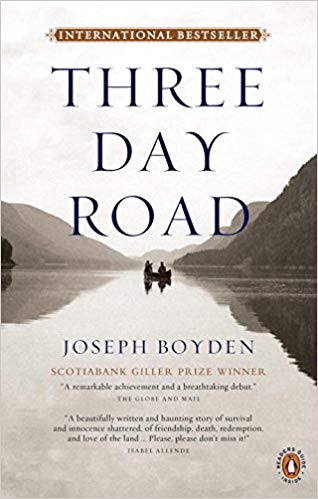
Three Day Roadby Joseph Boyden is an eye-opening novel. The novel describes the story of two young Indigenous men, following their journey as soldiers in the Canadian military during the First World War.
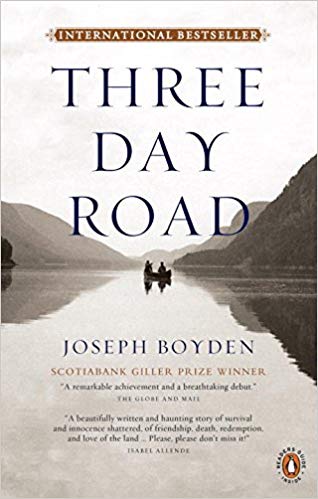
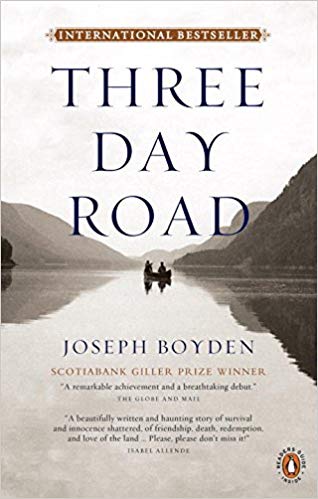
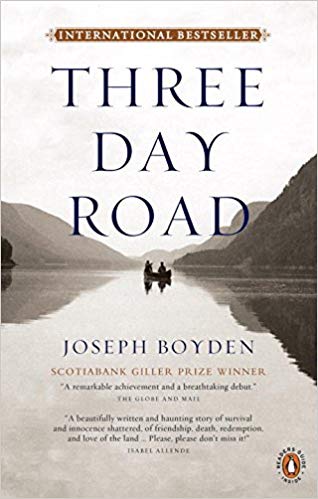
Print copy of Three Day Road by Joseph Boyden
Within the first ten chapters, the story jumps around a lot and information is seemingly thrown around all over the place. It starts off narrated by Niska, the aunt of a young Cree man named Xavier Bird. She hides away in the bushes, far from anyone else in fear of being judged, waiting for the arrival of her nephew’s friend Elijah Whiskeyjack. Months after the news of her nephew’s death, she waits eagerly for days, anticipating the return of the closest thing to a family she has, Elijah. To her surprise, her allegedly deceased nephew Xavier is there to greet her. Both thinking the other has passed away, they go through a whirlwind of emotions and story telling. The narrative jumps around from Niska to Xavier as well as the past to present time, depicting both perspectives to a gruesome tale of heartbreak and horror. Between stories of wartime and happy childhood, it becomes clear that Xavier has only returned home to die. Down a leg, addicted to morphine, and bearing the physical and mental scarring of war, Niska’s last remaining family member will die, only it will be the second time she will experience his death.
Xavier’s war flashbacks describe the harsh realities of wartime. In chapter 2, Arrival, Xavier has his first flashback. It comes after he is unable to sleep, wondering why Elijah is missing, why his aunt is somehow alive, and suddenly his thoughts drift back to the war. He describes Elijah as “the truly skilled one” and ” the blessed one”(Boyden 10), of his skills as a sniper. He slyly mentions that “at one time I was the better marksman” (Boyden 10).
After a mere 100 or so pages, I find myself hoping to read that Elijah is not actually dead. The story is confusing me a little, as it jumps around so much, but the one thing I can tell is that Xavier and Elijah had an extremely close bond and relationship. The way that the story is being told is puzzling, however I can only assume that jumping back and forth from childhood stories and wartime helps keep the mood of the story in high spirits, as the wartime stories are truly gut wrenching.
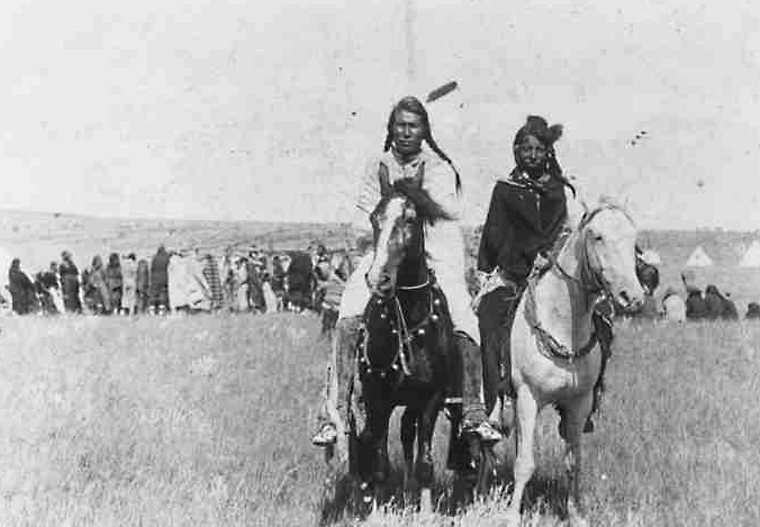
Traditional Cree Clothing, courtesy of Pinterest.ca
When analyzing the characters, Niska’s childhood stories and her clear love for Xavier makes me think that she is going to be a key character in the story. It is immediately evident that her love for the boy is ever so strong, and that she is happy yet heartbroken at his return home, “my body hums with nephew’s pain and with the realization that he has come home only to die”(Boyden 9). I believe that her character’s relevance will only grow and that she will be a big part of the story. I picture her as a frail little woman with thigh length hair and a heart the size of the earth, with such great wisdom.
In the fourth chapter, titled “My Father”, Niska tells the story of the windigo- a supernatural power taking over a person and turning them into cannibals. She speaks so highly of her father, a windigo killer. She idolizes her father and he is clearly a figure of authority in their tribe. I can somehow relate to this. My grandfather, who worked as a fisherman in rural Vietnam, helped my grandmother, their five children, and my great-uncle’s entire family escape during the aftermath of the Vietnam war. My grandfather has always been a figure of great authority and wisdom in my family, much like Niska’s father.
The story describes the Cree Indian traditions with such detail that I wonder, is the author a Cree man himself?
One of the first things I noticed is that the chapters are not numbered, and the titles are in both English and Cree. The “About Joseph Boyden” section in the back of the book states that his “heart is part Irish, part Ojibwe“. This furthered my interest in the matter and prompted some research, where I discovered that Boyden’s claims of Indigenous ancestry may not be true. An APTN National News article titled “Author Joseph Boyden’s shape-shifting Indigenous identity” debates his alleged ancestry. There are conflicting reports as to whether or not Boyden is truly of Indigenous descent. I won’t get into more detail regarding this, but all of this has made me wonder how credible his descriptions and explanations are, and if this novel really is a true depiction of the lives of First Nations people during the First World War.
Lastly, when making predictions on how I believe the story will progress I think to myself, how do I want it to progress? I would love to find out what happened to Elijah, why Xavier was told his aunt passed away and vice versa, why Xavier returned as Elijah, and what Niska did while her last remaining family member was off to war. I also think to myself, are the soldiers in their platoon of any significance? Or does Xavier only think of them because they spent so much time together? This story has only just begun for me, and I can’t wait to read the rest.
Source: Boyden, Joseph. Three Day Road. Toronto: Penguin Canada, 2005. Print.
Season One: Episode One , The Alibi tells the story of the murder of Hae Min Lee and the conviction of Adnan Syed, the ex-boyfriend of Hae Min. Narrated by Sarah Koenig, the podcast focuses on Syed’s professed innocence.
This is one of the first podcasts I have listened to, and certainly the first that is based on a crime. I have watched countless crime documentaries, TV shows, news reports and have read up on many as well, but this was the first solely audio based story about a crime. I found it quite strange to be honest, this way of presenting investigative journalism is unlike any other. I had a hard time imagining what Syed looked like and just couldn’t picture the story in head. I’m sure it helps many other people as they get to picture the story themselves, something they may not be able to do while reading, but I’ve always been a very visual learner so only having audio proved difficult for me. I found myself continuously looking up news stories about the murder of Hae Min Lee and reading those as I listened to the podcast. I needed some sort of visual to allow my mind to understand the story. Pictures alone didn’t help me piece it together so I had to read news stories while listening to the narrator speak, which I’ve never done before so I think personally I just need visuals to fully appreciate a story.
One of the first thoughts that came to mind when listening to this podcast was how the family of Hae Min must feel, having a whole 12 episode series dedicated to the murder of their little girl. Hae Min was only a teenager, still in high school and now there is an insane amount of information about her and her alleged killer. Now keep in mind I’ve only listened to the first episode, but it seems to me that this is a series that revolves around Syed’s innocence. I must imagine that her family feels distraught and only wants justice for her death. But I also wondered, do they think Adnan Syed is the killer? So I decided to do a little sleuthing and found that upon the news of a possible retrial, the family stated they “stand by” the original verdict.
Statement by the Lee family – courtesy of Justin Fenton
The narrator, Sarah Koenig, greatly discusses the difficulties of memory. Syed does not remember much at all about the day of the crime, and that proves to be a very big part of his conviction. When I think of myself, I highly doubt I could remember anything from six weeks ago (the time between the crime and Syed’s arrest) let alone 15 years later, when the series was made. While I must admit that it is strange Syed doesn’t remember more from the day his ex-girlfriend went missing, I’m not sure I would be much better. You always hear about criminals thinking about nothing other than the crime that put them behind bars while in jail, but do they really remember the day as it really happened? But thinking back on the series, creating a 12 episode series on a convict who doesn’t remember anything seems very strange and makes me want to watch the rest of it.
I must hope and pray prosecutors either put the right man behind bars or will do so, but that we will never know. All I do know, is that I wish for the family of Hae Min Lee peace and the ability to put this tragic event behind them. Hae Min Lee 10/15/1980 – c. 01/13/1999






























 Elle's Tells